Porcelain tile is one of the best all-around bathroom flooring options because it resists water, holds up to daily wear, and comes in dozens of styles. Ceramic tile and quality luxury vinyl are strong alternatives depending on budget and comfort preferences. The right choice for your Rhode Island bathroom depends on moisture exposure, foot traffic, and the condition of your existing subfloor.
Bathroom flooring has a tougher job than flooring in almost any other room of your house. It needs to handle water and humidity, frequent cleaning, bare feet, temperature swings, daily foot traffic, and years of wear without cracking, staining, or becoming a slip hazard.
At Home Renovation Pros, we help Rhode Island homeowners choose bathroom flooring based on more than appearance. Water resistance, durability, maintenance, traction, comfort, and budget all matter, and so does the condition of the existing floor underneath. Here’s what we recommend, and why.
Quick Answer: What Is the Best Flooring for a Bathroom?
Porcelain tile is one of the best all-around bathroom flooring options because it is highly water-resistant, durable, and available in a wide range of styles. Ceramic tile and properly selected luxury vinyl can also work well, depending on the bathroom and budget. The best bathroom flooring should resist moisture, provide appropriate traction, be easy to maintain, and suit how the room is used.
What Should You Look for in Bathroom Flooring?
Before comparing specific materials, it helps to know what actually makes a bathroom floor “good.” Every option below should be weighed against these criteria:
-
- Water resistance: Bathrooms regularly encounter splashes, humidity, and occasional standing water near tubs and showers.
- Slip resistance: This matters most near showers, tubs, and vanities where floors get wet.
- Durability: Your flooring needs to withstand daily use, cleaning products, and years of foot traffic.
- Maintenance: Consider how much grout sealing, staining risk, or routine cleaning a material demands.
- Comfort: Bathroom floors are walked on barefoot more than almost any other surface in your home.
- Style: Flooring needs to coordinate with your vanity, shower tile, and overall design vision.
Keeping these factors in mind turns the rest of this guide into a genuine comparison rather than a simple list of products.
1. Porcelain Tile: Best All-Around Bathroom Flooring
Porcelain tile is our strongest overall recommendation for Rhode Island bathrooms. It has very low water absorption, which makes it one of the most water-resistant flooring materials available, and it holds up extremely well to years of daily use.
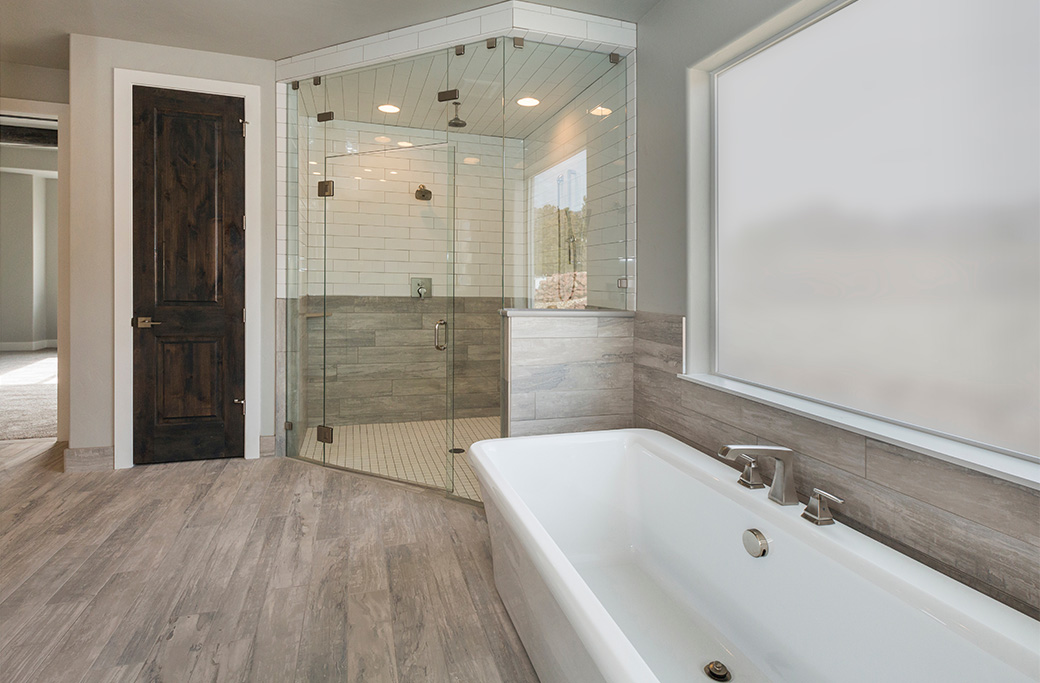
Porcelain also offers an enormous range of styles. You’ll find stone-look and wood-look porcelain, large-format tiles for a seamless appearance, and countless colors and finishes to match nearly any bathroom design. The tradeoff is that porcelain can feel colder and harder underfoot compared to softer materials, and installation quality matters, so it’s worth selecting a finish designed specifically for flooring rather than choosing purely on appearance.
| Best for: Homeowners who prioritize durability and water resistance above all else.
For more on styles, patterns, and sizes, see our bathroom tile ideas for Rhode Island homes.
2. Ceramic Tile: A Versatile Bathroom Flooring Option
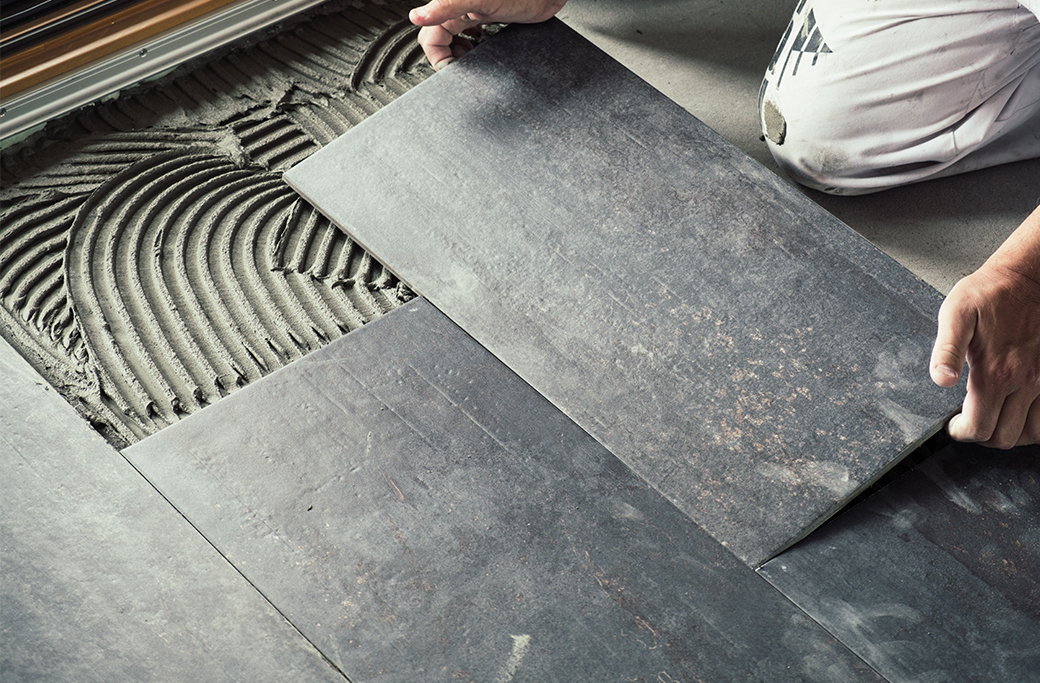
Ceramic tile shares many of porcelain’s advantages at a often more budget-friendly price point. Many ceramic tile products offer solid water resistance and a broad range of design options, making them a good fit for many residential bathrooms.
Ceramic tile typically isn’t quite as dense as porcelain, so it may be slightly more prone to chipping over time. Proper installation, including quality grout and sealing, remains essential regardless of which tile you choose.
| Best for: Homeowners who want a traditional tile floor with strong design flexibility while managing material costs.
3. Luxury Vinyl Flooring: Comfortable and Water-Resistant
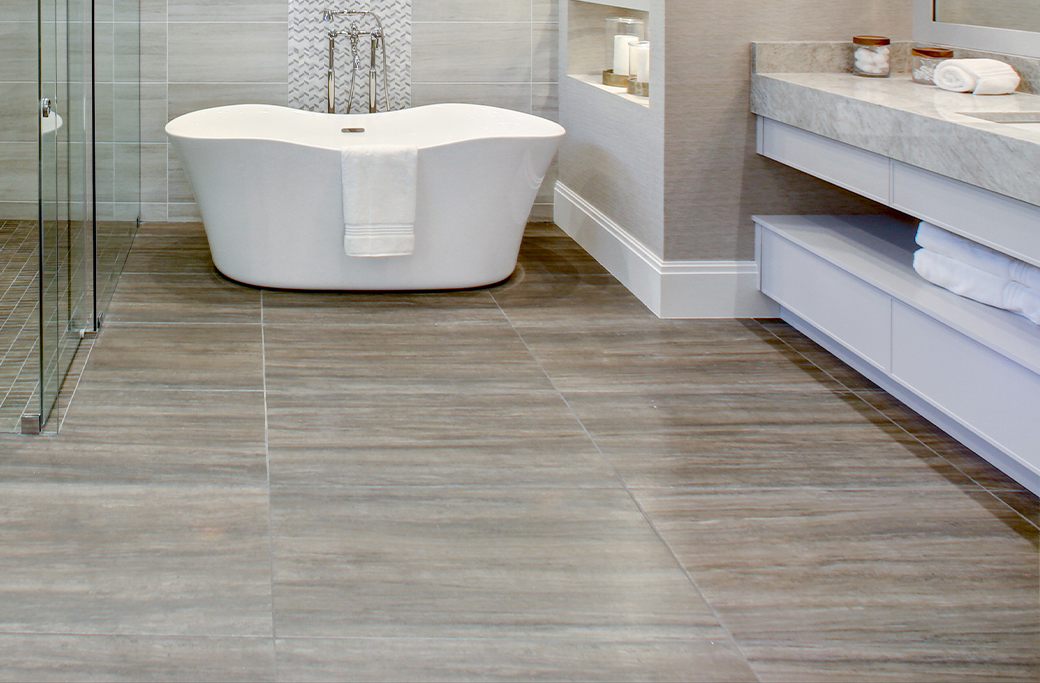
Luxury vinyl (LVP or LVT) is worth serious consideration if you’re weighing it against tile. It feels noticeably softer and warmer underfoot, which many homeowners appreciate first thing in the morning. Many luxury vinyl products are water-resistant, and some are rated waterproof, with realistic wood and stone visuals and relatively easy maintenance.
Quality varies significantly between manufacturers, and installation details, including subfloor prep and seam placement, affect long-term performance. Not every vinyl product on the market is appropriate for every bathroom application, so it’s worth checking manufacturer specifications before committing.
| Best for: Homeowners who prioritize comfort, simpler maintenance, and a less rigid surface than tile.
4. Natural Stone: Beautiful but Higher Maintenance
Natural stone, including marble, slate, and granite, delivers a premium look with natural variation you can’t replicate with manufactured materials. That beauty comes with tradeoffs: stone typically requires sealing, can be prone to staining without proper care, and slip resistance varies depending on the finish. Material and installation costs also tend to run higher than tile alternatives.
This is also where it’s worth distinguishing marble-look porcelain from actual marble. If you love the appearance of natural stone but want lower maintenance, porcelain alternatives can deliver a similar look with far less upkeep.
| Best for: Homeowners who prioritize natural materials and are comfortable with the maintenance that comes with them.
Should You Use Hardwood or Laminate in a Bathroom?
Traditional hardwood generally requires more caution in a full bathroom, because repeated moisture exposure over time can lead to warping, staining, or damage that’s difficult to reverse. Laminate flooring varies considerably in moisture resistance from product to product, so not all laminate is created equal.
This doesn’t mean these materials can never be used in a bathroom setting. For a full bathroom with regular water exposure, Home Renovation Pros generally prioritizes flooring specifically designed to handle wet and humid environments. Homeowners who love the look of wood often find that wood-look porcelain or a suitable luxury vinyl product delivers that aesthetic without the moisture risk.
Bathroom Flooring Comparison
|
Flooring |
Water Resistance |
Maintenance |
Comfort |
Typical Cost Level |
|---|---|---|---|---|
|
Porcelain Tile |
Excellent |
Low–Moderate |
Hard/cool |
$–$$ |
|
Ceramic Tile |
Very Good |
Low–Moderate |
Hard/cool |
$ |
|
Luxury Vinyl |
Very Good–Excellent* |
Low |
Softer/warmer |
$–$$ |
|
Natural Stone |
Varies |
Moderate–High |
Hard/cool |
$$ |
|
Hardwood |
Limited |
Higher |
Warm |
$$ |
*Water resistance varies by specific product and installation, so it’s worth reviewing manufacturer specifications before purchasing.
What Is the Best Flooring for a Small Bathroom?
Don’t assume a small bathroom requires tiny tiles. In fact, large-format tile often reduces visual interruption and can make a compact space feel larger by minimizing grout lines. Lighter flooring tones can also contribute to a more open feeling, and continuing a cohesive palette from floor to wall helps the room feel intentional rather than cramped.
Pattern is worth considering carefully, too. A bold pattern can complement a small bathroom, but it can just as easily overwhelm one, so scale matters. Installation layout also becomes more important in tight rooms, where every cut and seam is more visible.
If you’re planning a full renovation for a compact space, our guide to remodeling a small Rhode Island bathroom covers budget-specific considerations.
What Bathroom Flooring Is Best for Older Rhode Island Homes?
Choosing flooring for an older home isn’t simply a matter of finding something that “looks the part.” Older Rhode Island homes often present practical challenges that affect flooring decisions, including uneven subfloors, previous layers of old flooring, subfloor damage, older plumbing penetrations, and prior moisture damage that isn’t visible until demolition begins.
The condition underneath your new flooring can matter just as much as the finish material you select. See our bathroom remodeling ideas for older Rhode Island homes for more on navigating these challenges. Older bathrooms can sometimes reveal conditions that weren’t visible before demolition, which is one reason homeowners should consider building a bathroom remodeling contingency budget into their project plan.
Should You Install Heated Bathroom Floors in Rhode Island?
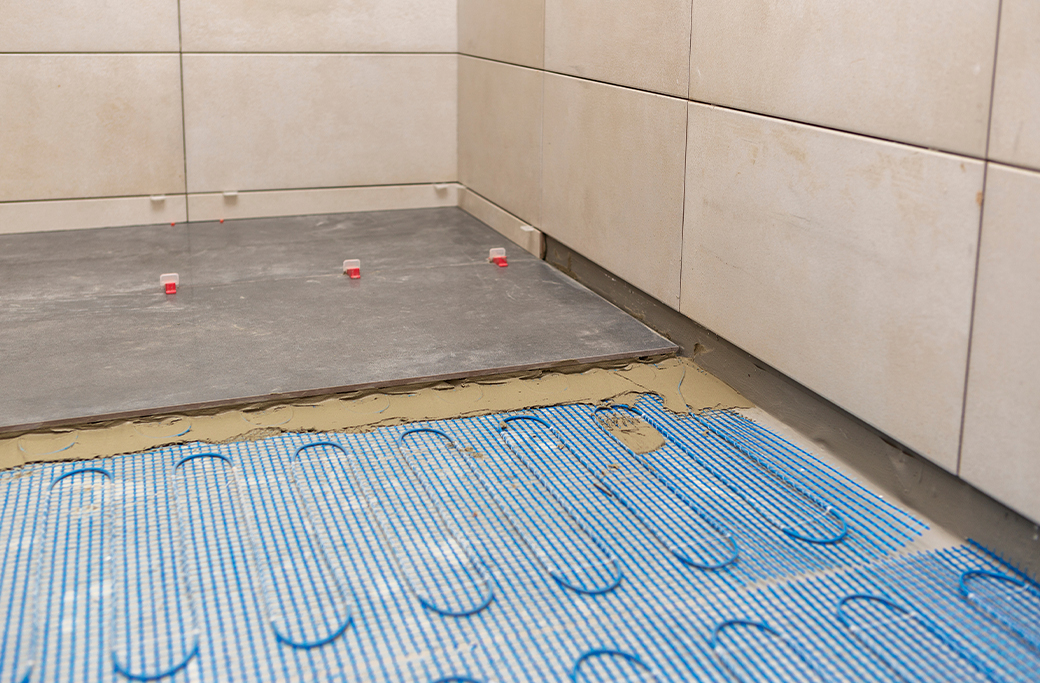
Radiant floor heating adds a genuine comfort upgrade during Rhode Island’s colder months, particularly when paired with tile installations, which conduct heat effectively. It’s worth noting this is primarily a comfort and luxury upgrade rather than a significant energy-saving feature.
Heated floors do add to overall project cost, and the system needs to be planned before flooring installation begins, since it affects subfloor height and electrical requirements. If comfort underfoot is a priority for your household, it’s worth discussing early in the planning process.
Don’t Overlook Slip Resistance
A polished finish doesn’t automatically mean a floor is appropriate for a wet bathroom environment. Manufacturer specifications typically include a slip-resistance rating, and it’s worth reviewing this before finalizing any material, especially near showers and tubs.
Household needs should factor into this decision as well. Homes with children or older adults may benefit from flooring with higher traction, particularly in accessibility-focused bathrooms. Bath mats help, but they aren’t a substitute for choosing flooring that’s appropriately slip-resistant in the first place.
How Much Does Bathroom Flooring Affect Remodeling Cost?
Flooring cost depends on several factors: the material itself, your bathroom’s square footage, existing flooring removal, subfloor condition, floor preparation needs, pattern or layout complexity, and whether you’re adding a heated-floor system.
One important distinction: the least expensive flooring material doesn’t necessarily produce the least expensive installed floor. If substantial subfloor repair or leveling is required, labor costs can outweigh material savings. For a full breakdown of what drives bathroom renovation costs in Rhode Island, see our guide to bathroom remodeling costs in Rhode Island and our detailed look at the factors that affect bathroom remodel cost.
Coordinate Your Flooring With the Rest of the Bathroom
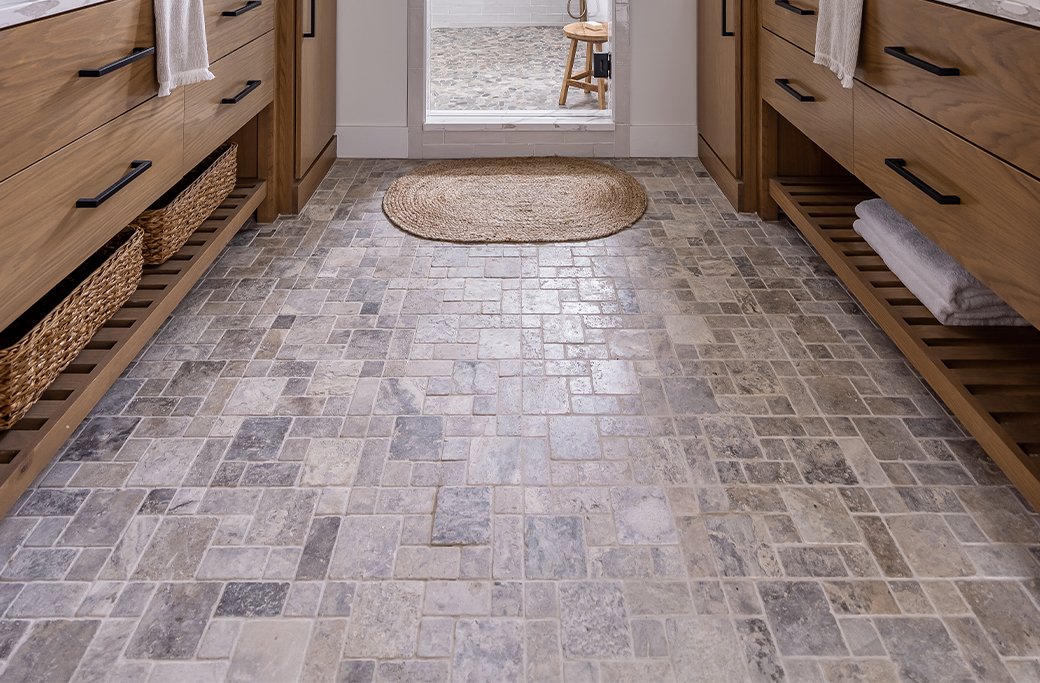
Flooring shouldn’t be chosen in isolation. It needs to work alongside your shower tile, vanity, countertop, paint color, and fixtures to create a cohesive design. A stunning floor can still feel disconnected if it clashes with the rest of the room.
For more on building a coordinated design, explore our guides on choosing the best bathroom vanity for your Rhode Island remodel and best paint colors for bathrooms.
Choosing Bathroom Flooring With Home Renovation Pros
At Home Renovation Pros, we help Rhode Island homeowners consider flooring as part of the complete bathroom renovation, not as an isolated decision. That includes evaluating the existing floor and subfloor, coordinating flooring with your other material choices, and weighing durability, moisture resistance, maintenance, comfort, and budget before installation ever begins.
We aren’t a flooring retailer. We’re the remodeling contractor who helps you make every material in your bathroom work together, from the subfloor up.
Start Planning Your Rhode Island Bathroom Remodel
Whether you’re replacing an outdated bathroom floor or planning a complete renovation, Home Renovation Pros can help you select materials that work for your home, your budget, and your design goals.
Contact Home Renovation Pros today to schedule your bathroom remodeling consultation.