Multigenerational living is becoming increasingly common, as families look for practical ways to keep aging parents, adult children, or extended relatives close to home. While living together offers emotional and financial benefits, creating the right balance between connection and privacy is essential. Many homeowners quickly realize their current layout no longer provides enough comfortable living space for everyone under one roof.
For many Rhode Island homes, the basement presents the perfect opportunity to create a functional and private in-law suite. A well-designed basement apartment can provide family members with greater independence, while still keeping loved ones nearby for support and peace of mind. In addition to improving everyday functionality, a finished in-law suite can also increase your home’s long-term value and versatility.
At Home Renovation Pros, we specialize in basement remodeling and custom living spaces throughout Rhode Island. From older homes with unique structural considerations to modern layouts needing smart space planning, our team understands what it takes to transform an underused basement into a safe, comfortable, and welcoming living area. Before beginning construction, however, there are several important factors homeowners should carefully consider to ensure the space is legal, practical, and built for long-term comfort.
Start with Local Codes and Permit Requirements
Building a livable apartment in your basement requires strict adherence to local regulations. Rhode Island building codes dictate exactly how a lower level can be used for sleeping and daily living. You cannot simply put up drywall and call the space a bedroom.
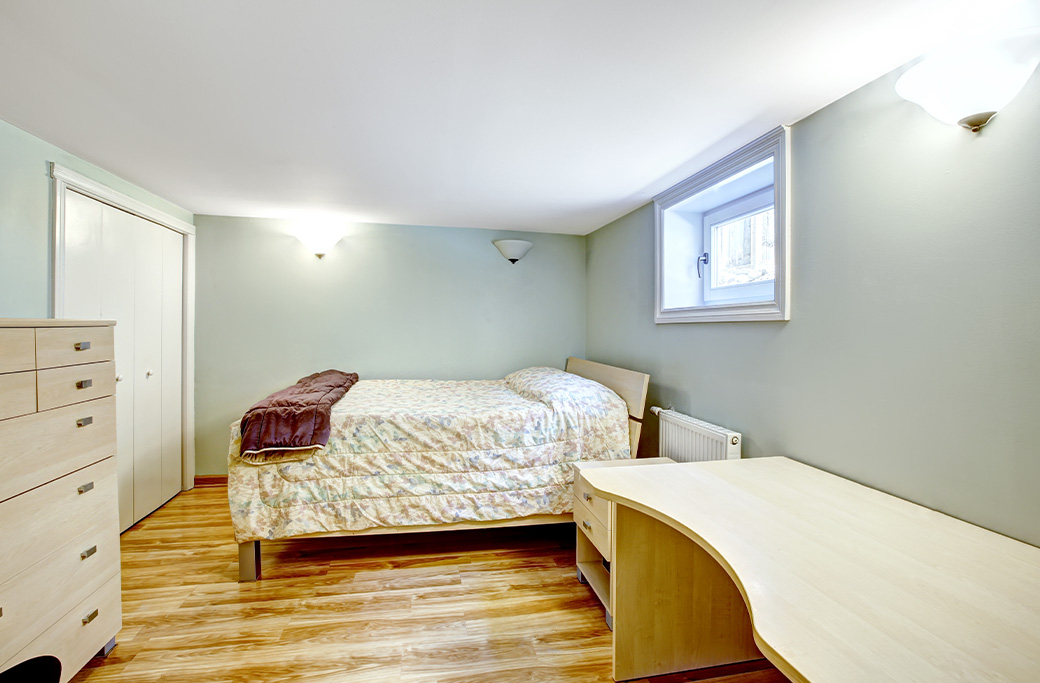
Egress windows are one of the most important legal requirements. Any basement bedroom must have an emergency exit that allows occupants to escape and first responders to enter. You must also meet specific ceiling height regulations to ensure the space feels open and complies with safety standards.
Electrical and plumbing permits are mandatory for an in-law suite. Adding a kitchenette or a full bathroom means tying into your home’s existing systems, which requires professional oversight. Planning your project with an experienced general contractor prevents costly mistakes and ensures your new suite passes all municipal inspections.
Privacy and Separate Living Considerations
A successful in-law suite balances privacy with family connection. You need to ask yourself how independent the occupant will be. Will there be a private exterior entrance, or will they use the main house door? A dedicated entrance offers maximum independence and makes the space feel like a true apartment.
Think carefully about the layout. A complete suite typically includes a bedroom, a full bathroom, a kitchenette, and a small living area. You also need to plan for adequate storage and closet space, as basements often lack natural storage solutions.
Noise reduction between floors is another major consideration. Sound travels easily through floor joists. Adding soundproofing insulation to the ceiling of the basement ensures that footsteps upstairs do not disturb the person living below, and vice versa.
Moisture and Basement Conditions
Basements require special attention before any finishing work begins. Since they sit below ground, they are naturally prone to dampness. You must address moisture issues completely before hanging drywall or laying flooring.
Waterproofing is the first line of defense. This might involve sealing foundational cracks, installing a sump pump, or upgrading exterior drainage. Once the space is watertight, you need to manage humidity control. Proper ventilation and built-in dehumidification systems prevent a musty smell from developing.
Mold prevention goes hand-in-hand with moisture control. Using moisture-resistant insulation and mold-resistant drywall protects your investment. Preparing the space properly before finishing ensures the new suite remains healthy, safe, and comfortable for years to come.
Accessibility and Aging-in-Place Features
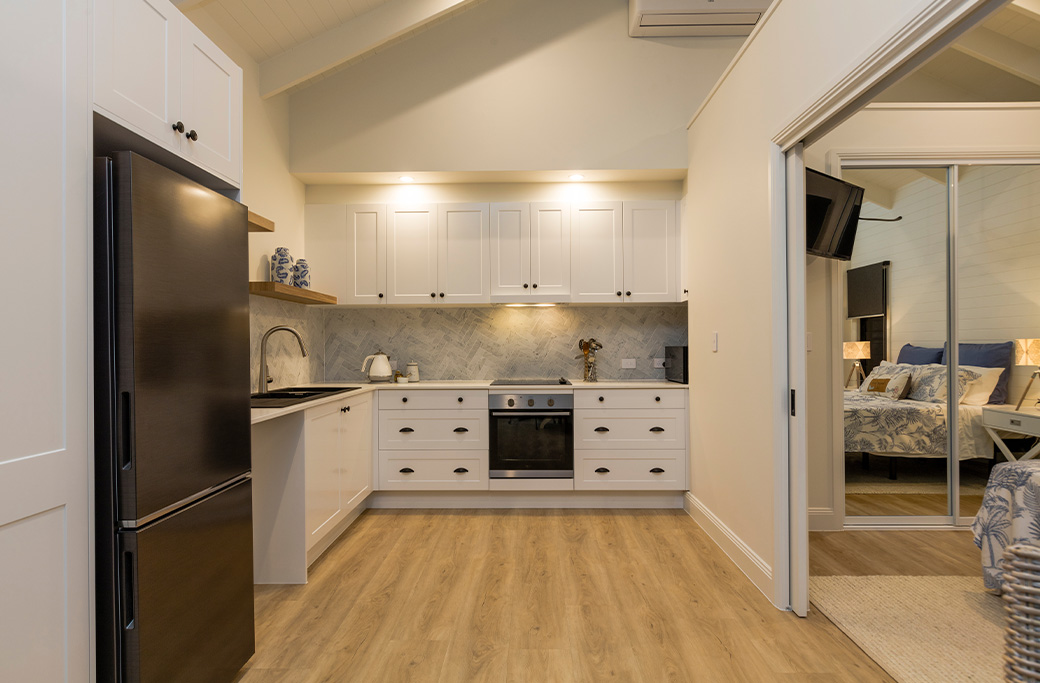
If you are building the suite for aging parents, accessibility should drive your design choices. Thoughtful design improves daily comfort and guarantees long-term usability.
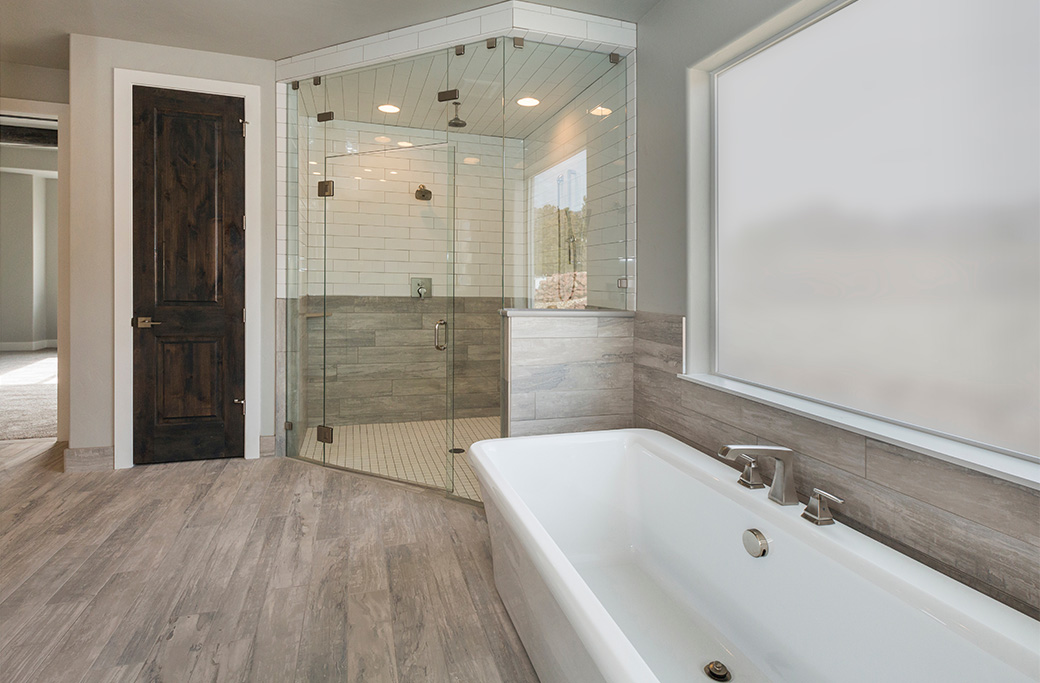
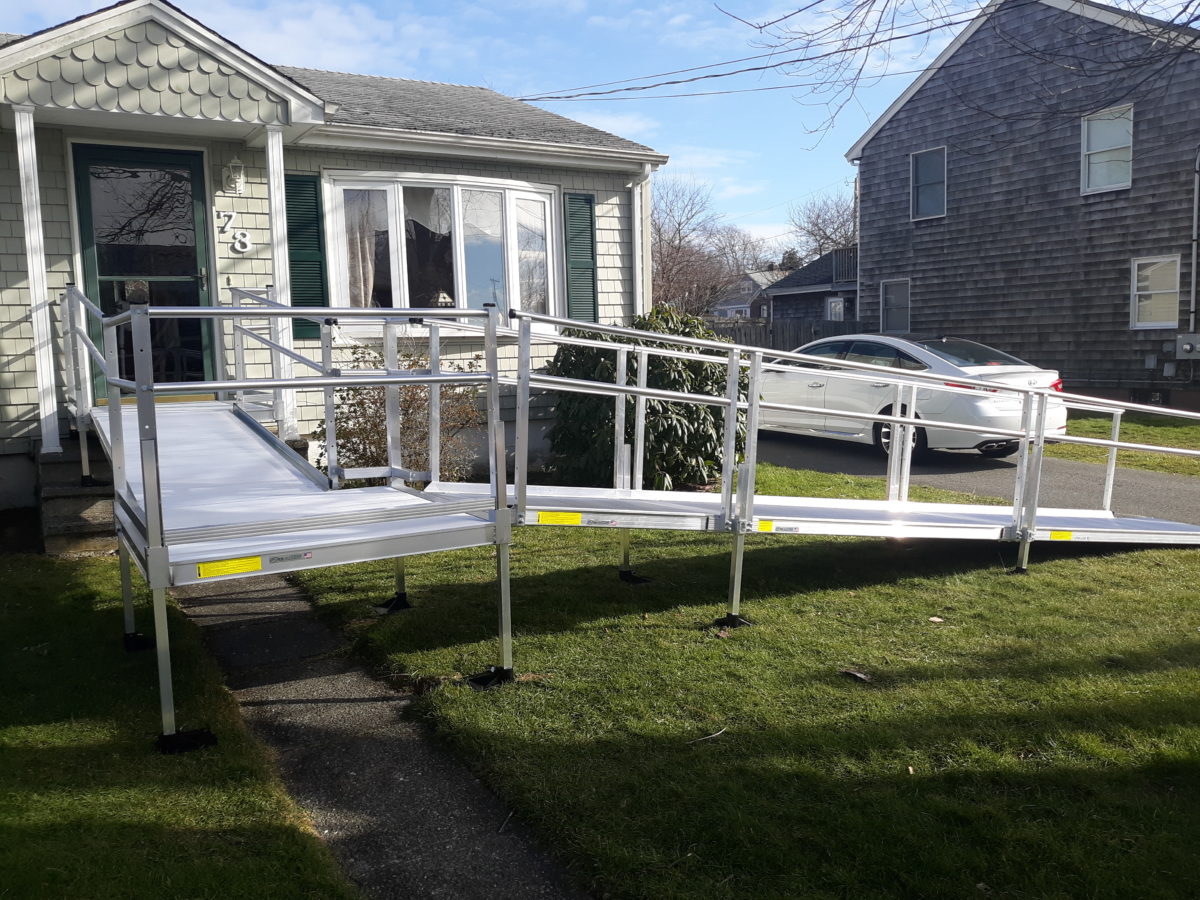
Incorporate wider doorways that can easily accommodate a walker or a wheelchair. Walk-in showers with zero-entry thresholds are significantly safer than traditional tubs. Install sturdy grab bars in the bathroom and choose non-slip flooring for the entire suite to prevent dangerous falls.
Whenever possible, design the suite to require minimal stair usage. If the basement is only accessible via an interior staircase, you might need to explore installing a stairlift. At Home Renovation Pros, our background in home mobility means we know exactly how to blend accessibility with beautiful style.
Design Ideas for a Comfortable In-Law Suite
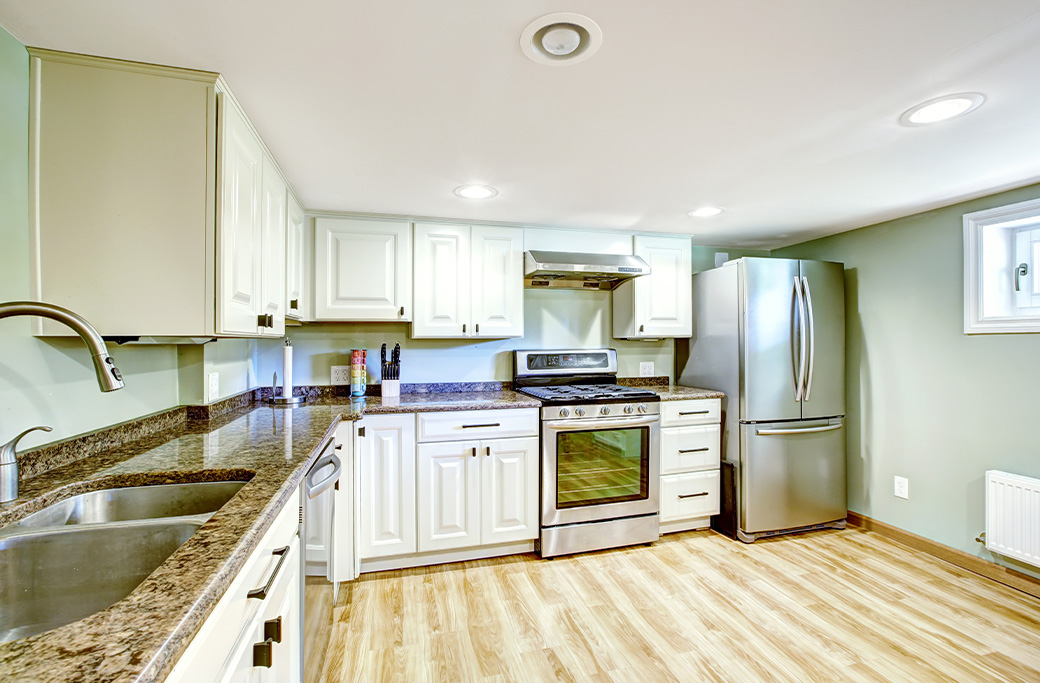
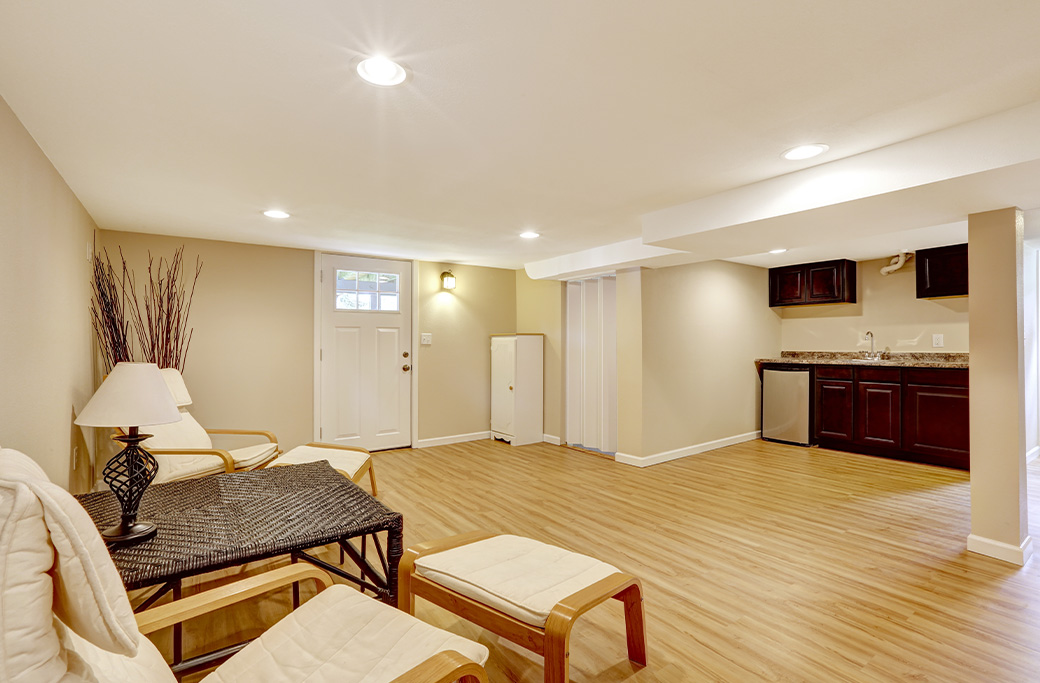
Basement spaces can sometimes feel dark or confined. Smart design choices make the suite feel warm, inviting, and entirely intentional. Open-concept layouts work best for lower levels because they allow natural and artificial light to travel freely across the room.
Bright lighting is essential. Use a combination of recessed ceiling lights, wall sconces, and under-cabinet lighting. Painting the walls in light, neutral colors helps reflect that illumination and makes the ceilings feel taller.
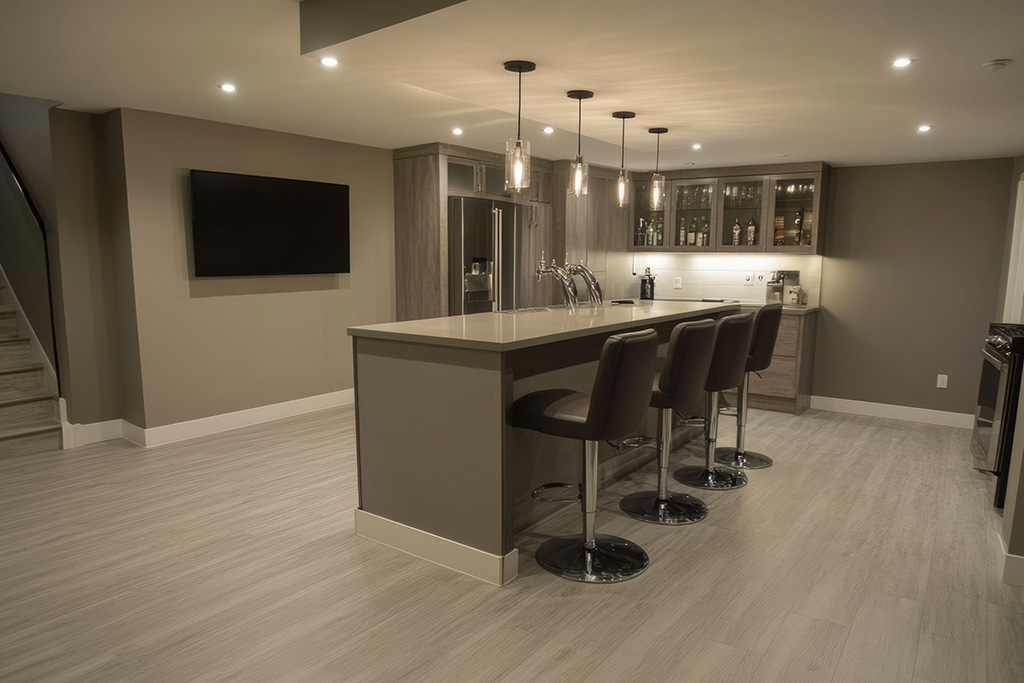
Compact kitchenettes save space while providing complete functionality. You can include a small refrigerator, a microwave, a sink, and a hot plate. Maximize the remaining square footage by using built-in storage solutions and multi-purpose furniture, like a sofa bed or an extendable dining table.
Budgeting for a Basement In-Law Suite
Finishing a basement is a major investment. Understanding the cost factors upfront helps you plan a realistic budget. Plumbing additions are often the most expensive part of the project. Trenching the concrete floor to add a bathroom or a kitchenette requires specialized labor.
Electrical upgrades also impact the budget, as the new suite will likely require its own subpanel. Waterproofing, framing, insulation, and the potential addition of a separate exterior entrance will round out the major expenses.
However, a finished in-law suite, offers incredible return on investment. It adds highly desirable square footage to your home. If your family’s needs change in the future, the space provides ultimate flexibility for a home office, a rental unit, or a guest space.
Why Homeowners Choose Home Renovation Pros
Home Renovation Pros has extensive experience with basement remodeling and multi-generational living spaces throughout Rhode Island. We understand how to take a raw, unfinished lower level and turn it into a beautiful, functional home.
Our team provides customized designs tailored specifically to your family’s needs. We guide you through the entire process, handling permits, planning, and construction. With a sharp focus on comfort, safety, and long-term value, we ensure your new in-law suite exceeds your expectations.
Creating a Basement In-Law Suite in Rhode Island: What to Consider First
A successful in-law suite always starts with thoughtful planning. Taking the time to evaluate the specific needs of your family ensures the final space works perfectly. Focus heavily on safety, accessibility, and privacy during the design phase. Anticipate future needs, so the space can adapt as your family grows and changes over the years.
Thinking about converting your basement into an in-law suite? Contact Home Renovation Pros today to schedule a consultation and explore your options.