If you’re staring at outdated tile, a tired vanity, or a bathtub nobody uses, you’re not alone. Thousands of Rhode Island homeowners are tackling bathroom renovations right now, and the reasons go beyond aesthetics. A thoughtfully executed bathroom remodel improves your daily life and positions your house to compete when it’s time to sell. At Home Renovation Pros, we walk you through everything from budget planning to fixture selection, drawing on our experience at Home Renovation Pros of Rhode Island and real estate insights for those thinking ahead to resale.
Why a Bathroom Renovation Is Worth It
A mid-range full bathroom renovation in Rhode Island in 2025–2026 typically runs $12,000 and up, and homeowners can expect to recoup 70–90% of that investment at resale according to national remodeling reports.
-
- Daily comfort improvements: Better storage, proper ventilation, layered lighting, and a layout that actually works for your family make mornings less chaotic and evenings more relaxing.
- Resale value boost: Buyers nowadays expect updated bathrooms. A fresh, neutral bath can shorten days on market and generate stronger offers—something we see consistently in our projects at Home Renovation Pros of Rhode Island.
- Avoiding costly repairs: Older bathrooms often hide water damage, mold, or failing plumbing. A renovation lets you address these problems before they become emergencies.
Key Bathroom Renovation Trends
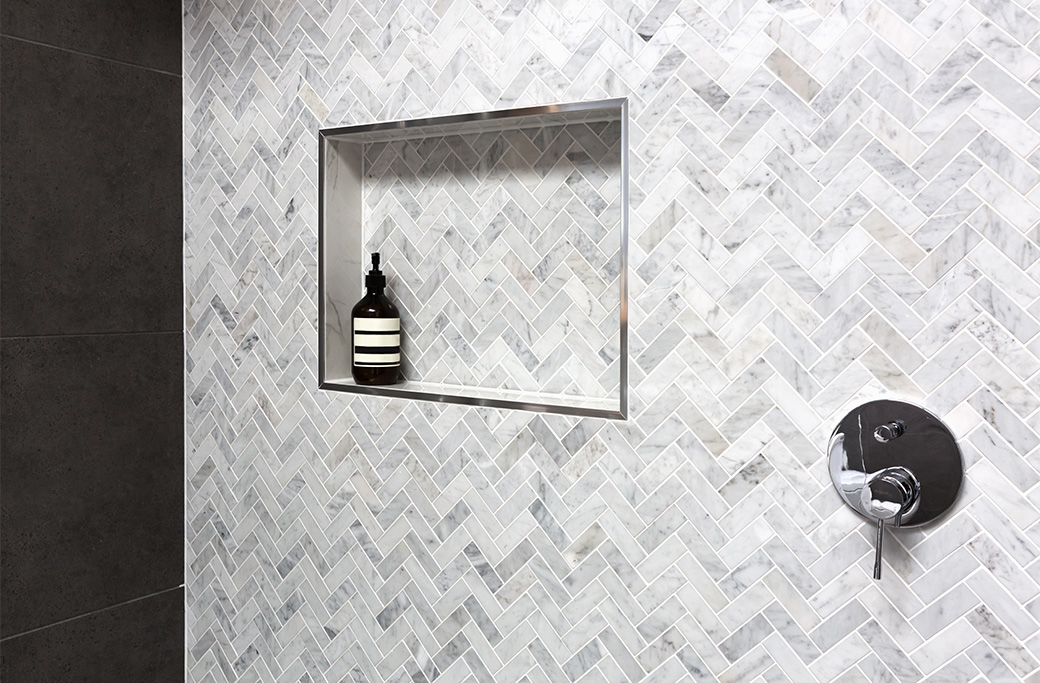
Current bathroom design leans toward “spa-like but practical.” Think energy-efficient fixtures, low-maintenance finishes, and thoughtful details that actually get used.
-
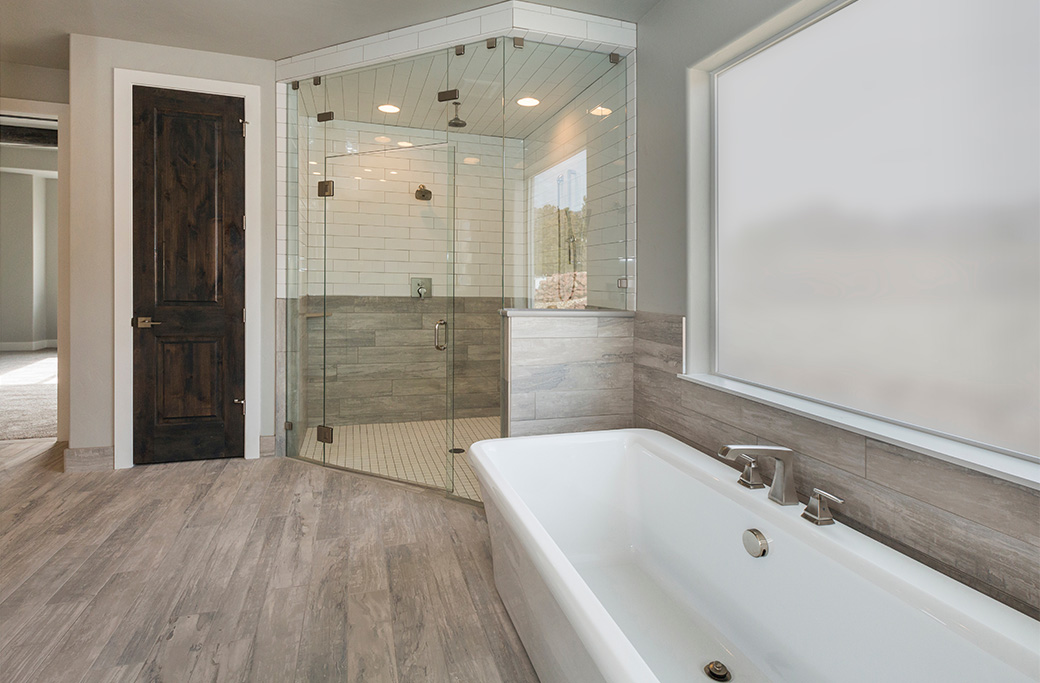
- Sanctuary-style primary baths: Larger showers with built-in benches, rain shower head systems paired with handheld sprayers, and dimmable layered lighting create that hotel-spa feel at home.
- Freestanding tub resurgence: In larger primary suites, freestanding soaking tubs are making a comeback. However, in a small bathroom or when space is tight, a tub-shower combo often makes more practical sense.
- Mixed textures: Matte porcelain tile on floors, warm wood vanity cabinets, brushed metal faucets and hardware, and a statement wall tile in the shower niche. This mix keeps rooms interesting without feeling busy.
- Tech upgrades that matter: Heated floors under tile (a game changer for cold New England winters), humidity-sensing exhaust fans, backlit mirrors, and smart thermostats for radiant heat systems.
- Coastal New England influence: In Providence and Newport area homes, we’re seeing soft blues, warm whites, and natural stone looks that nod to the region’s coastal character.
Planning Your Bathroom Renovation (Budget, Scope & Timeline)
Mistakes in a bathroom, especially with plumbing and waterproofing, are expensive to undo. Investing time in the planning phase saves money and headaches down the road.
Define your scope first:
Structural changes and moving plumbing significantly increase costs. Relocating a drain or adding a second sink can add $2,000–$5,000 to your budget.
-
- Create a ranked list: Before talking to any contractor, separate your “must-haves” from “nice-to-haves.” A curb-less shower and extra storage might be non-negotiable, while a heated towel bar could be a luxury you add if budget allows.
- Realistic timelines: Expect 1–2 weeks for cosmetic work, 3–6 weeks for a full renovation assuming permits and inspections go smoothly. Supply chain delays can extend this, so order materials early.
- Our approach: At Home Renovation Pros of Rhode Island, we build a written schedule covering demolition, rough-ins, inspections, and finish work. Homeowners know exactly what’s happening and when.
Design Decisions: Layout, Style & Function
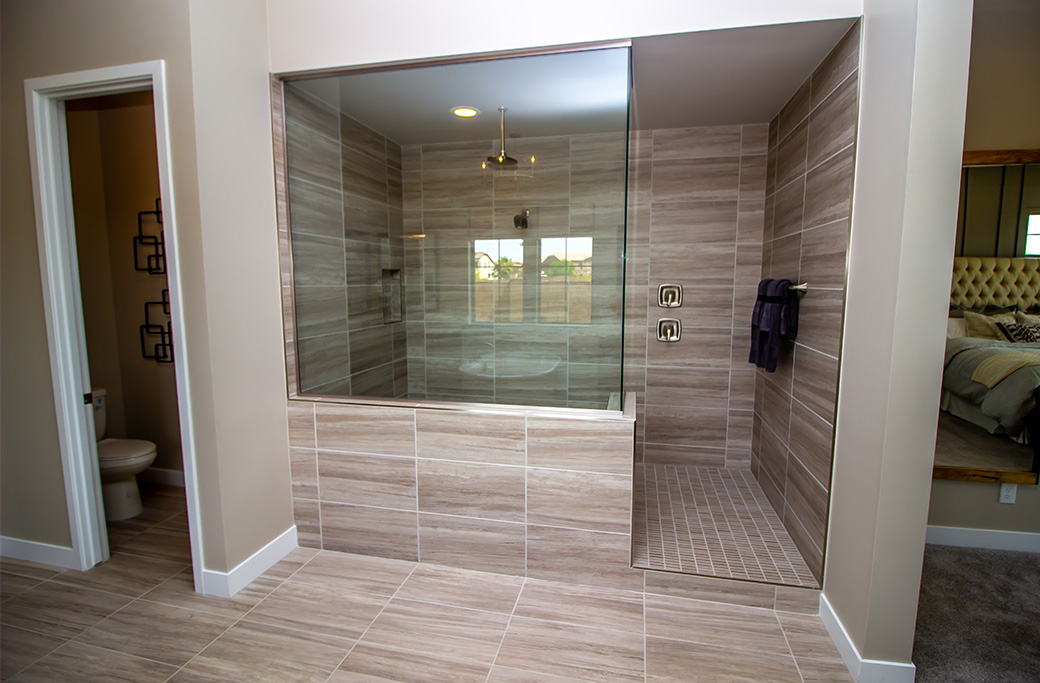
Decisions about layout should come before you fall in love with specific materials. Moving drains and walls affects your budget more than tile choices ever will.
When to keep existing layout:
-
- Your current plumbing works and drain locations make sense
- The room flows well and meets your needs with minor tweaks
- Budget is a primary concern
When to consider changes:
-
- Converting a rarely used tub to a walk-in shower with a low threshold for aging-in-place
- Adding a double vanity where a single sink creates morning traffic jams
- Opening up a cramped corner layout that wastes floor space
Making the room feel larger:
-
- Glass shower panels instead of curtains
- Larger format tiles (fewer grout lines = less visual clutter)
- Wall-hung vanities that show floor underneath
- Pocket doors where feasible to reclaim swing space
Styles that age well in New England homes:
-
- Classic white or light stone-look tile
- Shaker-style vanity cabinets
- Black, brushed nickel, or chrome hardware
- Neutral paint colors that complement rather than compete
Bring photos or a Houzz/Pinterest board when meeting your contractor. Visual references help ensure everyone shares the same vision for your bathroom project.
Smart Choices in Materials & Fixtures
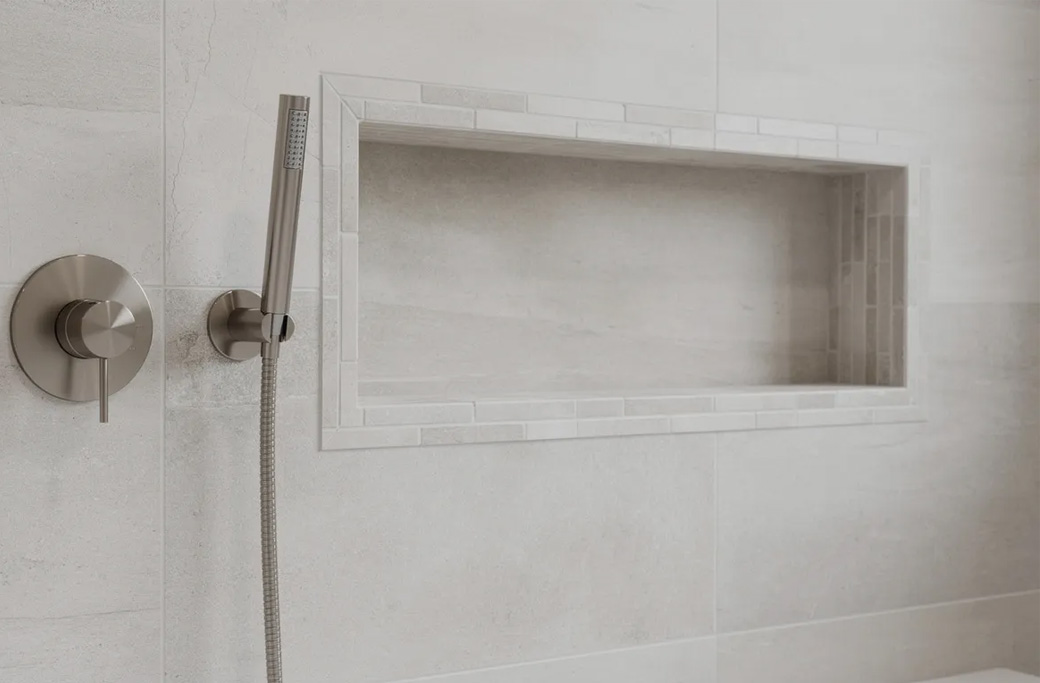
Bathrooms are wet, steamy environments. Every material you choose must handle moisture and be easy to clean for years to come.
Floor and wall tile:
-
- Porcelain over ceramic for durability and water resistance (porcelain absorbs less than 0.5% moisture)
- Non-slip finishes for floors, especially important for older homeowners or families with children
- Example: 12×24 matte porcelain on floors, 3×12 subway tile in shower with contrasting grout
Shower systems:
-
- Pressure-balanced or thermostatic valves prevent temperature swings when someone flushes a toilet elsewhere
- Quality fixtures in brushed nickel, chrome, or matte black that match throughout the room
- Consider a hand shower on a slide bar plus a fixed head for flexibility
Vanities and countertops:
-
- Moisture-resistant vanity boxes (plywood or marine-grade materials, not particleboard)
- Soft-close drawers and doors—a small detail you’ll appreciate daily
- Quartz or solid-surface counters for low maintenance; they resist staining and don’t need sealing
Grout matters:
-
- Light-to-medium gray hides dirt better than white
- Stain-resistant grout formulas reduce maintenance
- Epoxy or quartz-based grout for high-use showers—more expensive but nearly waterproof
- Grout color choice changes the entire look: contrasting grout highlights tile patterns, matching grout creates a seamless appearance
Lighting, Ventilation & Heating
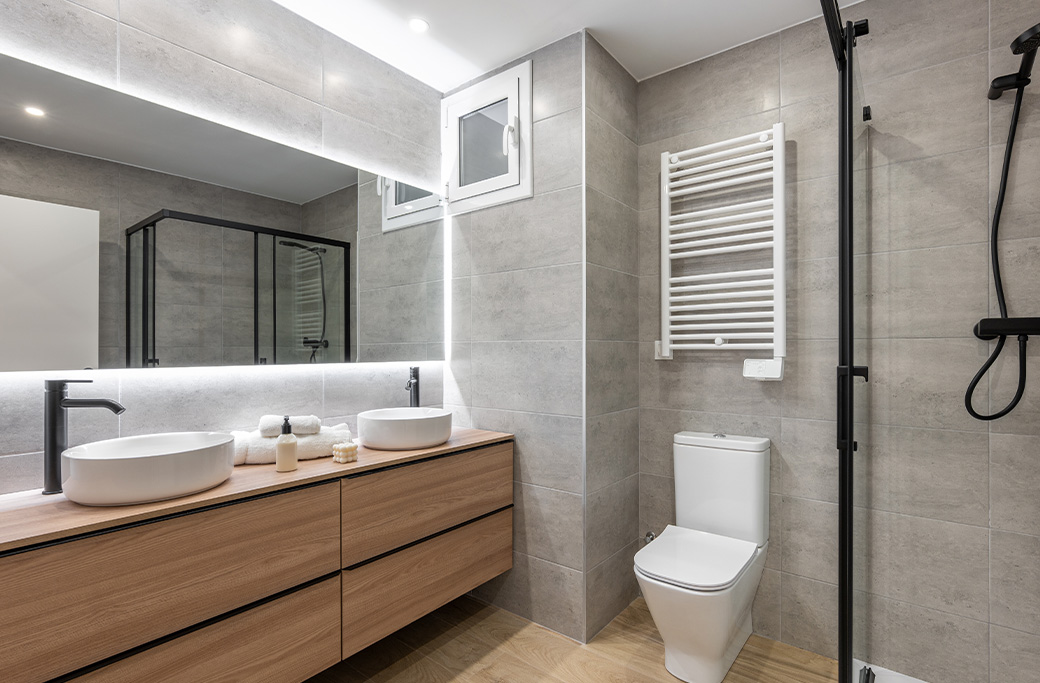
Many older Rhode Island bathrooms are under-lit and poorly vented, leading to mold, peeling paint, and a generally unpleasant experience.
-
- Layered lighting plan: Overhead recessed can lights for general illumination, vanity lights at eye level on each side of the mirror (not just above) to eliminate shadows, and optional shower-rated recessed lights for safety.
- Code-compliant exhaust fans: Size fans to room square footage (minimum 50 CFM for standard baths, more for larger spaces). Install timers or humidity sensors so fans run long enough to actually clear moisture. Always vent outside, never into the attic.
- Electric radiant floor heating: Under-tile heating mats are popular in cold New England winters. The install cost adds $1,000–$2,000 in materials, but transforms the experience of stepping out of the shower.
- Heated towel bars: A nice-to-have comfort upgrade that also helps towels dry faster and resist mildew.
- Insulation opportunity: When walls are open during renovation, add insulation to exterior walls to reduce drafts and improve energy efficiency.
Working with a Professional Bathroom Renovation Company
A bathroom renovation involves multiple trades (plumber, electrician, tile setter, carpenter, painter) and coordination between them is what separates smooth projects from frustrating ones.
What a reputable local contractor handles:
-
- Permits and scheduling inspections
- Coordinating trade schedules so work flows efficiently
- Ordering materials and confirming delivery dates
- Resolving surprises like hidden water damage or outdated electrical
Before work starts, confirm:
-
- Written scope of work detailing exactly what’s included
- Projected timeline with key milestones
- Clear payment schedule tied to completion of phases
Vetting your contractor:
-
- Ask for references and actually call them
- Request photos of recently completed bathroom work to show current capabilities
- Verify insurance and licensing (Rhode Island requires contractor registration)
Schedule a pre-construction walk-through to confirm fixture locations: shower head height, niche position, towel bar placement, and toilet paper holder location. These details are easy to adjust before walls close but expensive to change after.
Step-by-Step Bathroom Renovation Process
While every project is unique, most full bathroom renovations in Rhode Island follow a predictable sequence:
-
- Design and selections: Finalize layout, choose tile, fixtures, vanity, and lighting
- Permits: Submit applications; wait times vary by municipality
- Demolition: Remove existing fixtures, flooring, and walls down to studs if doing a full gut
- Rough plumbing and electrical: Install new pipes, drains, wiring, and boxes behind walls
- Inspections: Required before closing walls; schedule these in advance
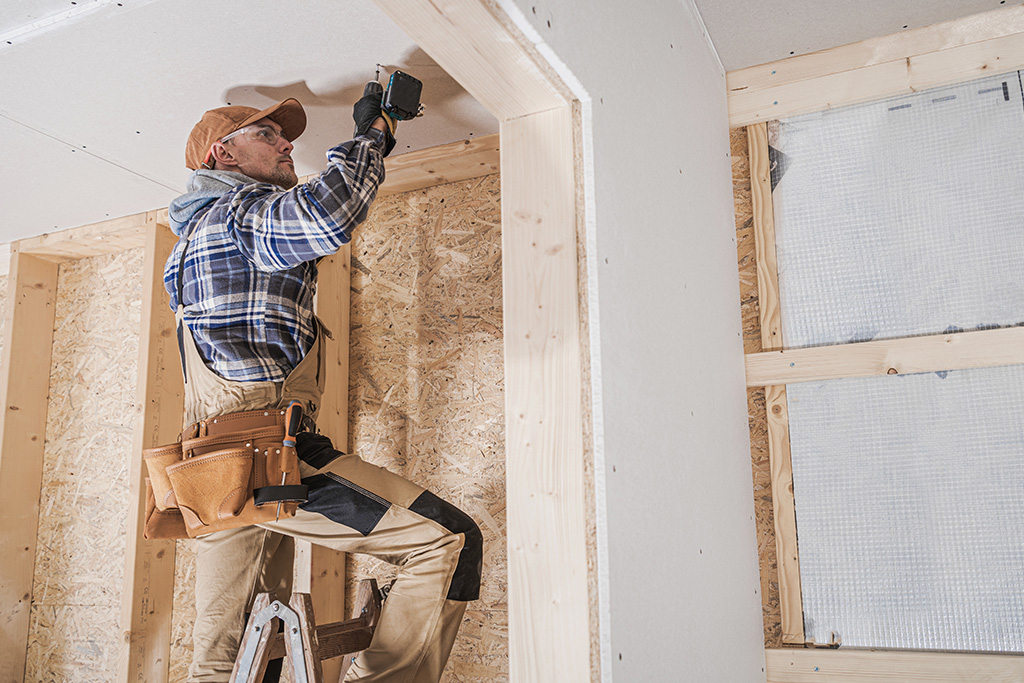
- Drywall and waterproofing: Install moisture-rated drywall, apply waterproofing membranes in shower areas
- Tile work: Floor tile first, then shower walls, then any accent areas
- Painting: Prime and paint walls and ceiling with moisture-resistant finishes
- Fixture installation: Vanity, countertop, sink, faucets, toilet, shower door, mirrors, and accessories
- Finishing touches: Hardware, towel bars, decor, and final cleaning
- Final walk-through: Review completed work and create a punch list for any touch-ups
Practical considerations:
-
- Plan alternative bathing arrangements during demolition and rough-in stages. In a one-bath house, this might mean showering at a friend’s home or gym for a week.
- At Home Renovation Pros of Rhode Island, we protect adjacent areas with floor covering and dust barriers to keep disruption manageable.
Common Bathroom Renovation Mistakes & How to Avoid Them
Learning from others’ regrets can save money and frustration. Here are mistakes we see repeatedly:
Removing the only bathtub without thinking ahead:
-
- If you have two bathrooms and want a walk-in shower in the primary, that works
- Removing the only tub in a house with one bath hurts resale. Families with young children want a tub, and some buyers will walk away.
- Advice: Keep at least one tub in the house
Skimping on waterproofing and ventilation:
-
- Inadequate waterproofing leads to mold, leaks, and tile failure within a few years
- Underpowered or missing exhaust fans cause paint to peel and mildew to grow
- Invest in proper PVC pan liners, quality membranes, and correctly sized fans
Undersized or poorly placed storage:
-
- Skipping shower niches or medicine cabinets leaves you with cluttered counters
- Not planning for a cabinet under the sink means toiletries end up on the floor
- Advice: Build in recessed niches, mirrored medicine cabinets, and drawer organizers
Aesthetic missteps:
-
- Trendy colors or overly dark tiles in tiny, windowless bathrooms feel cramped and show every water spot
- Highly patterned tile that looks amazing in a showroom can overwhelm a small space
- Solution: Choose neutral, light colors for small baths; add personality through paint and decor that’s easy to change
Small Bathroom & Kids’ Bathroom Renovation Tips
Many Rhode Island homes, especially older ones built before 1960, have compact bathrooms and shared family spaces. These require smart design ideas to maximize function.
Small bathroom strategies:
-
- Walk-in or neo-angle showers with clear glass panels make the space feel open
- Wall-mounted vanities show more floor, creating the illusion of more room
- Mirrored medicine cabinets add storage without taking up floor space
- Recessed shelving in shower walls provides storage without intruding into the room
- Light colors, large mirrors, and continuous floor tile visually expand tight spaces
Kids’ bathroom considerations:
-
- Durable, slip-resistant floors (textured porcelain works well)
- Anti-scald valves are essential for safety
- Rounded corners on vanity countertops reduce injury risk
- Color palettes that work now and later: navy and white with colorful towels, or soft gray with fun accessories
Save money over time: Change hardware, shower curtains, wallpaper accents, and paint as children grow instead of re-tiling the entire room. This approach lets the space evolve without another major renovation.
How Bathroom Renovation Affects Home Value & Resale
Bathroom updates rank among the most valuable improvements for resale. Current buyers expect clean, functional bathrooms with modern fixtures.
Why renovated bathrooms matter to buyers:
-
- Updated bathrooms photograph well, and most buyers start their search online
- At showings, bathrooms receive close inspection with dated or damaged spaces raising red flags
- A neutral, well-executed renovation appeals to the broadest range of buyers
Focus on what matters:
-
- Quality workmanship that’s visible in details like grout lines, caulk joints, and hardware alignment
- Timeless tile choices (think classic subway, large-format porcelain, or subtle stone looks)
- Good lighting that makes the room feel bright and inviting
- Skip ultra-custom features that only suit one taste
Bathroom Renovation Guide: Costs, Design Ideas & What to Expect
A well-planned renovation of your bathroom spaces delivers both immediate comfort and long-term value. Whether you’re updating a cramped half bath or transforming a dated primary suite, the key is starting with a clear plan, choosing quality materials, and working with professionals who understand New England homes.
Ready to get started? If you’re in Rhode Island, contact Home Renovation Pros of Rhode Island for an in-home consultation. We’ll walk through your space, discuss your priorities, and provide a detailed proposal.