Stepping onto a cold, dated bathroom floor is nobody’s idea of luxury. A bathroom renovation is one of the most impactful home improvements you can make, and the tile you choose sets the tone for the entire space. It’s the difference between a functional, utilitarian room and a spa-like sanctuary where you can truly unwind.
However, with endless options for materials, sizes, textures, and patterns, the selection process can feel overwhelming. Choosing the right tile isn’t just about aesthetics; it’s about finding the perfect balance between durability, safety, and style. The right choice will stand up to years of steam and splashing while maintaining its beauty, ultimately impacting the longevity of your renovation and the resale value of your home.
Choosing the right bathroom tile depends on moisture resistance, slip safety, style, and budget. Porcelain and ceramic tiles are popular for their durability and cost-effectiveness, while patterns and layouts can enhance both function and design. At Home Renovation Pros, we specialize in guiding homeowners through these decisions. From sleek modern retreats in Providence to cozy, classic bathrooms in Tiverton, we know how to match the right materials to your specific needs. We will walk you through everything you need to know to make an informed decision for your next project.
1. Understanding Bathroom Tile Materials
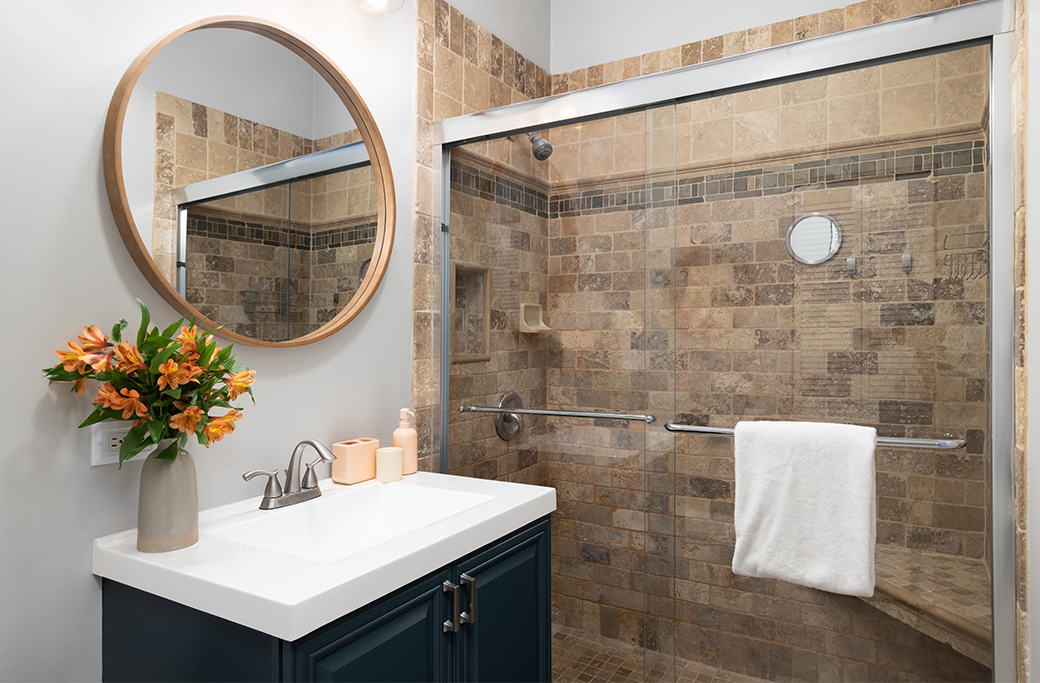
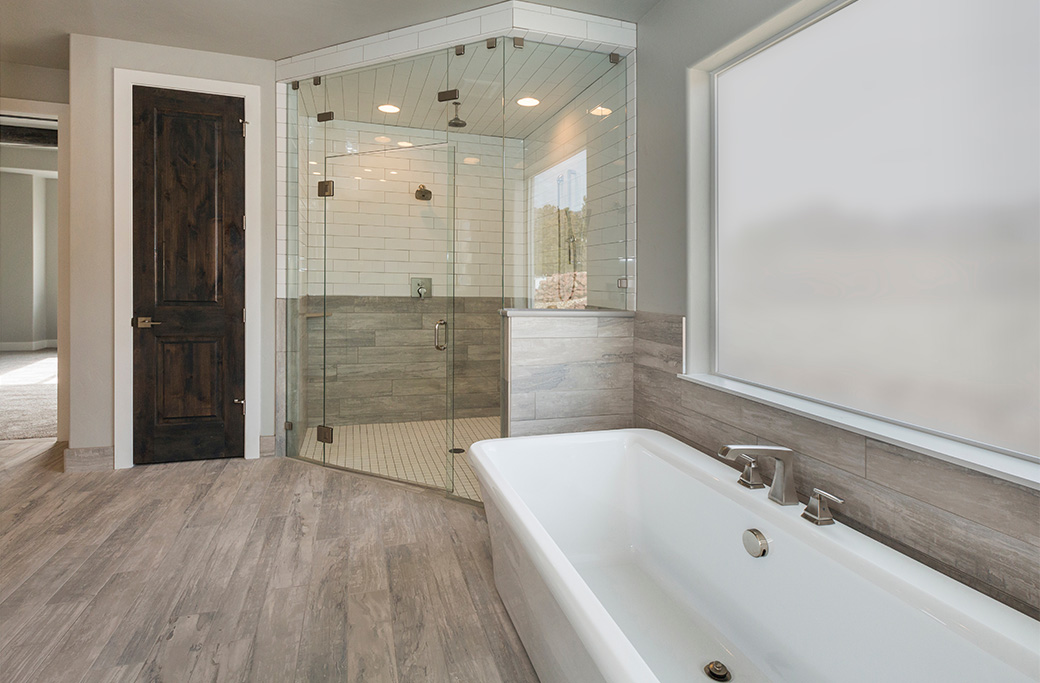
Shower with brown stone tiles.
Not all tiles are created equal. The material you choose dictates how your bathroom looks, how much maintenance it requires, and how long it lasts.
Ceramic Tile
Ceramic is one of the most popular choices for bathroom renovations, and for good reason. It is generally affordable, easy to cut, and comes in a vast array of colors and finishes. Since it is less dense than porcelain, it is often easier to install. However, it is slightly more porous, making it better suited for walls and low-traffic floor areas rather than heavy-duty commercial use.
Porcelain Tile
If durability is your top priority, porcelain is the way to go. It is fired at higher temperatures than ceramic, making it denser and highly resistant to water absorption. This makes porcelain an excellent choice for bathroom floors, shower pans, and areas that see a lot of moisture. It resists staining and scratching better than almost any other material.
Natural Stone Tile
For a touch of true luxury, nothing beats natural stone. Materials like marble, granite, slate, and travertine offer unique veining and textures that man-made tiles can’t quite replicate. However, this beauty comes with a caveat: maintenance. Natural stone is porous and requires regular sealing to prevent water damage and staining. It’s a choice that prioritizes aesthetic elegance over low maintenance.
Glass Tile
Glass tiles are typically used for accents, backsplashes, or shower niches rather than full floors. They reflect light beautifully, adding depth and visual interest to small spaces. While they are impervious to water, they can be slippery when used on floors and are susceptible to cracking if installed incorrectly.
2. Choosing the Right Tile for Each Bathroom Area
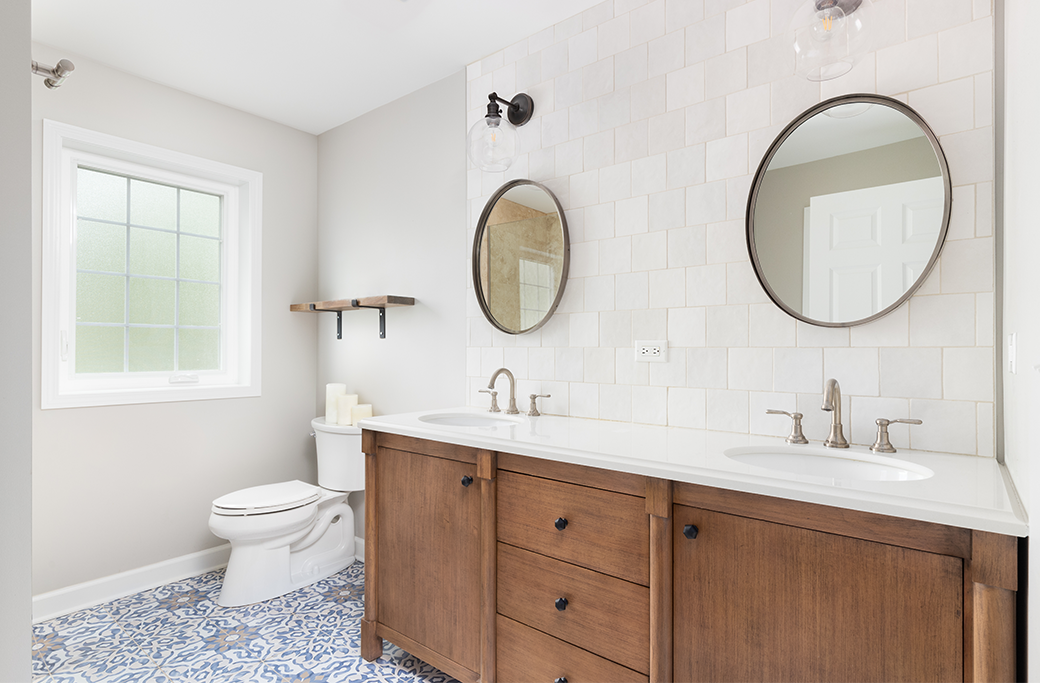
A common mistake is assuming one type of tile works everywhere. Different zones in your bathroom have different performance requirements.
Bathroom Floors
Safety and durability are of the utmost importance here. You need a tile with a high Coefficient of Friction (COF) rating to ensure it isn’t slippery when wet. Textured porcelain or matte-finish ceramic are excellent choices. Avoid highly polished stone or glass for main flooring areas to prevent slip-and-fall accidents.
Shower Walls & Tub Surrounds
Since these vertical surfaces don’t see foot traffic, you have more design freedom. Large-format tiles are popular here because they reduce the number of grout lines, making cleaning easier. Glossy finishes work well on walls as they help bounce light around the shower, making it feel larger.
Vanity Backsplashes & Accent Walls
This is where you can let your personality shine. Since these areas don’t face heavy wear or constant water saturation, you can use more delicate materials like glass mosaics, hand-painted ceramic, or intricate stone patterns. It’s a low-risk area to try a bold design trend.
3. Tile Patterns & Layout Options
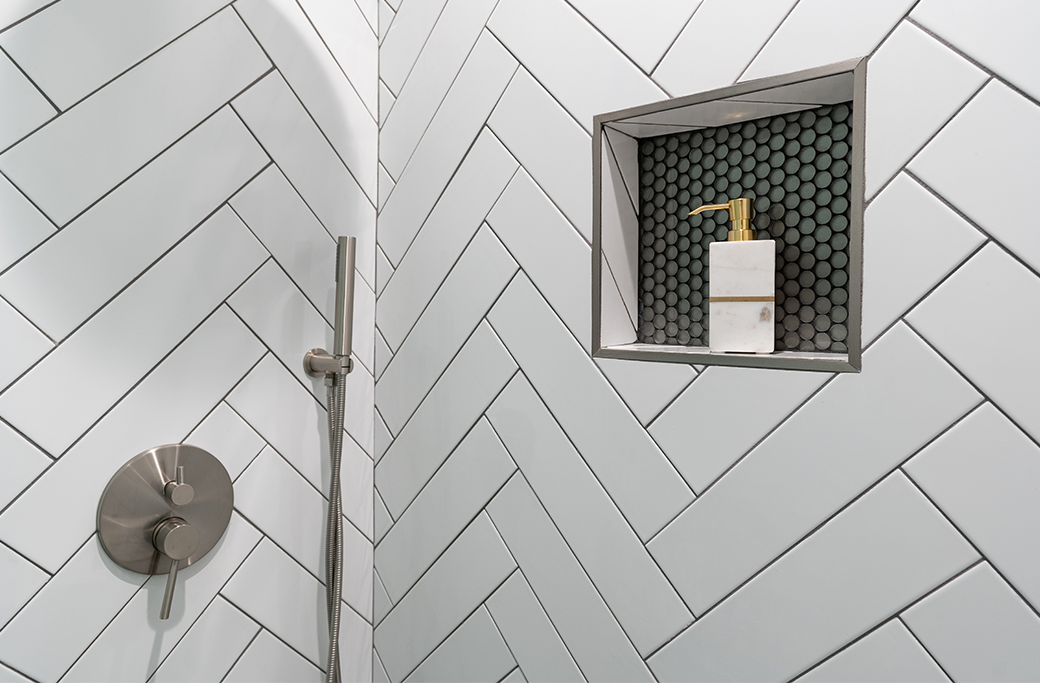
A shower inset featuring white tiles arranged in a classic herringbone pattern, accentuated with contrasting gray grout.
The way you lay out your tile can transform the look of the room just as much as the tile itself.
Classic Layouts
The straight lay (grid) pattern is the most common and easiest to install, offering a clean, simple look. The brick or subway pattern (offset) is a timeless classic that adds just enough visual interest without being overwhelming. These layouts work with almost any design style, from traditional to contemporary.
Popular Decorative Patterns
If you want to make a statement, consider a herringbone or chevron pattern. These zigzag layouts create movement and energy in the room. Basketweave patterns offer a vintage, historic charm often seen in early 20th-century homes.
Large-Format Tile Trends
Modern bathrooms are leaning heavily toward large-format tiles (e.g., 12×24 inches or larger). Using bigger tiles means fewer grout lines, which creates a seamless, expansive look that can make a small bathroom feel much bigger. It also means less scrubbing during your weekly cleaning routine.
Mixing Tile Styles
Combining different tiles can add depth, but it requires restraint. A general rule of thumb is to stick to no more than three different tiles in one bathroom: one for the floor, one for the walls, and perhaps one accent feature. Ensure the colors complement each other and that the textures don’t clash.
4. Safety & Practical Considerations
A beautiful bathroom must also be safe. When selecting floor tiles, specifically check the slip-resistance rating. Smaller tiles with more grout lines (like hexagonal mosaics) naturally offer more grip, making them a smart choice for shower floors.
Grout selection is another practical detail often overlooked. While white grout looks crisp, it shows dirt easily. Opting for a light gray or neutral grout can save you hours of scrubbing. Additionally, consider epoxy grout for wet areas; it’s more resistant to water and stains than traditional cement-based grout.
Finally, think about transitions. How will the tile meet your bedroom carpet or hallway wood floor? Proper threshold transitions are essential for a polished look and to prevent tripping hazards.
5. Bathroom Tile Costs: What to Expect
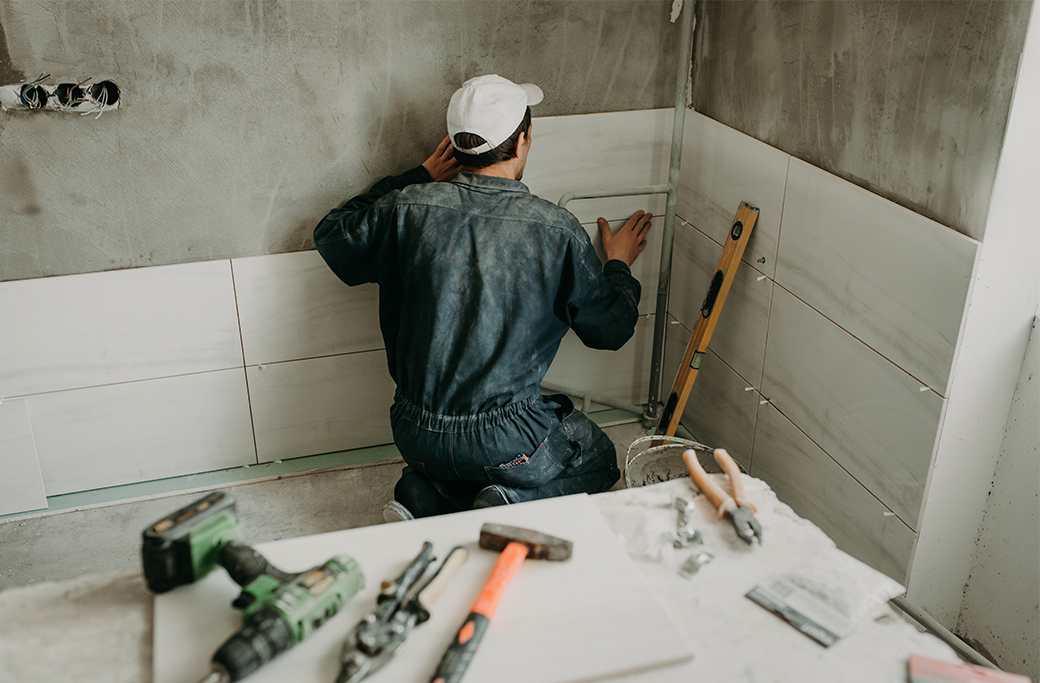
Large ceramic tiles on the shower walls create a clean, modern look with fewer grout lines to clean.
Budgeting for a renovation involves more than just the price per square foot of the tile.
Material Costs
-
- Ceramic: $2 – $10 per sq. ft.
- Porcelain: $4 – $15 per sq. ft.
- Natural Stone: $10 – $30+ per sq. ft.
- Glass: $15 – $40+ per sq. ft.
Installation Costs
Labor is a significant portion of the budget. Complex patterns like herringbone take longer to install and result in more waste from cutting, which increases labor costs. Large-format tiles require perfectly level subfloors to prevent cracking, which may require additional prep work.
Long-Term Value
While natural stone is expensive upfront, it adds significant resale value. However, high-quality porcelain often provides the best balance of cost, durability, and ROI because it lasts for decades with minimal maintenance.
6. How to Choose Tile That Fits Your Style & Budget
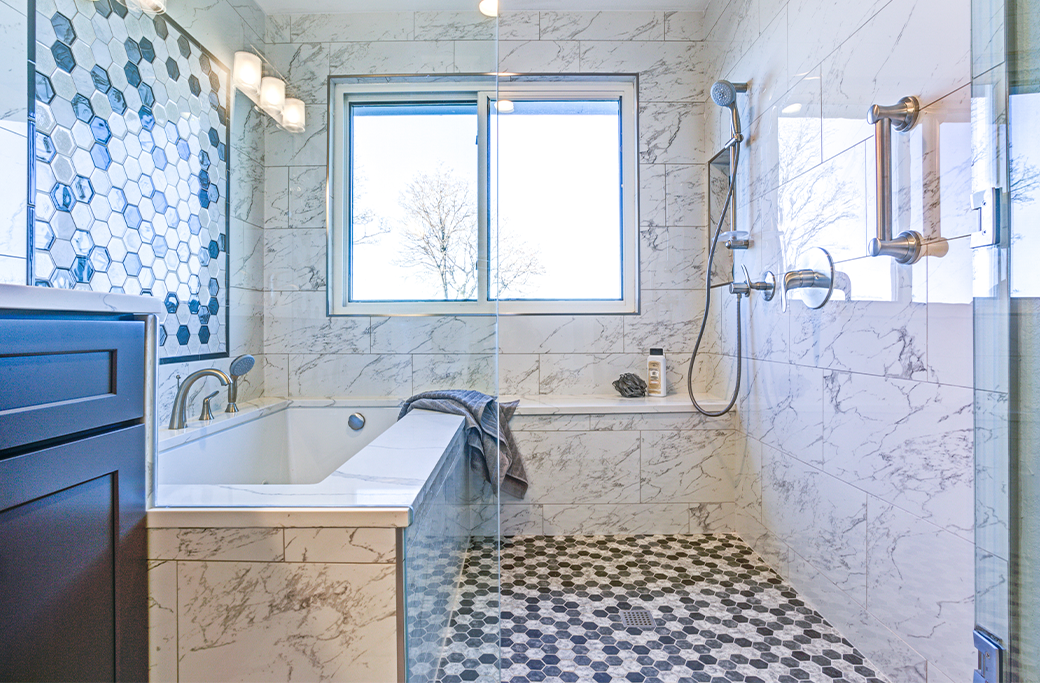
This luxurious primary bathroom features a stunning floor-to-ceiling marble tile surround, creating a seamless and opulent look. The walk-in shower and built-in bathtub are both encased in polished marble, enhancing the sense of cohesion and grandeur.
Start by defining the overall vibe of your bathroom. Are you aiming for an industrial look (concrete-look porcelain), a farmhouse feel (white subway tile with dark grout), or a luxury spa (marble-look porcelain)?
To keep costs down without sacrificing style, consider using expensive statement tile in small areas—like a vanity backsplash or a shower niche—and using affordable, classic field tile for the main walls and floors. This “high-low” mix allows you to achieve a custom look on a reasonable budget.
7. Common Bathroom Tile Mistakes to Avoid
-
- Choosing tile based on looks alone: Never buy a floor tile without checking its slip resistance and durability ratings.
- Ignoring grout lines: Intricate mosaics have a lot of grout. If you hate cleaning, this might be a regretful choice for a main floor.
- Overusing bold patterns: A busy floor paired with a busy wall can make a bathroom feel chaotic and smaller. Balance is key.
8. Why Work with Home Renovation Pros
Choosing the tile is just step one; installing it correctly is where the magic happens. At Home Renovation Pros, we bring unmatched local expertise to Rhode Island homeowners. We understand the specific challenges of local homes and ensure that waterproofing and subfloor preparation are handled with precision.
We don’t just install tile; we offer professional guidance on material selection and layout to maximize your budget and space. Our professional installation ensures long-lasting results, preventing issues like cracked tiles or water leaks down the road.
How to Choose Bathroom Tile: Materials, Patterns & Cost Guide
Selecting the right bathroom tile involves balancing your aesthetic vision with practical realities like maintenance and safety. By understanding the properties of different materials and planning your budget wisely, you can create a space that adds value to your home and joy to your daily routine.
Ready to start your transformation? Schedule a free consultation with Home Renovation Pros today. Let us help you turn your bathroom ideas into reality.